Leftover Chicken Breast Pot Pie
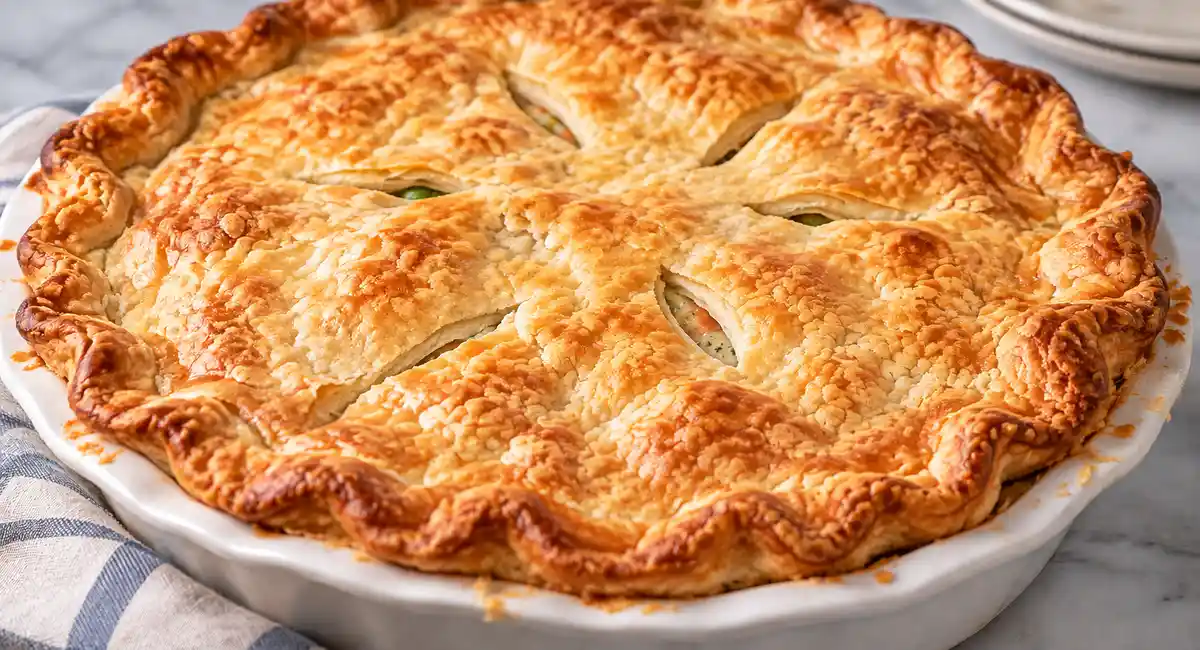
That container of chicken breast in the fridge is headed somewhere much cozier. This leftover chicken breast pot pie surrounds bite-size chicken with carrots, celery, peas, onion, and thick, creamy herb gravy, then seals everything between two golden pie crusts. The gravy is especially helpful with lean chicken breast because every piece gets surrounded by moisture instead of spending the whole bake exposed to dry heat.
Why This Recipe Works
Chicken breast can lose some of its softness after chilling, but pot pie gives it plenty of backup. Butter, cream, and chicken broth form a thick gravy that coats the pieces, while onion, thyme, garlic, and parsley bring the savory aroma back to life. Meanwhile, carrots, celery, and peas add color and texture. The double crust finishes the job with a crisp, flaky contrast to that creamy center.

Recipe Details
| Recipe Detail | Information |
|---|---|
| Prep Time | 20 minutes |
| Cook Time | 30 minutes |
| Total Time | 50 minutes |
| Servings | 8 slices |
What You’ll Need
| Ingredient | Amount |
|---|---|
| Leftover chicken breast, cut into small bite-size pieces | 1 lb |
| Unsalted butter | 4 tablespoons |
| Sliced carrots | 1 cup |
| Sliced celery | 1/2 cup |
| Chopped yellow onion | 1/2 cup |
| Salt | 1 1/4 teaspoons |
| Garlic powder | 1/2 teaspoon |
| Dried thyme leaves | 1/2 teaspoon |
| Ground black pepper | 1/4 teaspoon |
| All-purpose flour | 1/4 cup |
| Heavy cream | 1/2 cup |
| Chicken broth | 1 cup |
| Frozen peas | 1/2 cup |
| Fresh flat-leaf parsley, minced | 2 tablespoons |
| Unbaked pie crusts | 2 |
The carrots, celery, and onion build the savory vegetable base of the filling. Keep them fairly even in size so they soften at roughly the same pace.
The combination of butter, flour, heavy cream, and chicken broth creates the gravy. You want it thick enough to cling to the chicken instead of collecting as thin liquid at the bottom of the pie.
Cut the leftover chicken breast into small bite-size pieces rather than tiny shreds. Larger pieces keep the chicken noticeable among the vegetables and creamy gravy.
The ingredient quantities and double-crust structure stay closely aligned with the supplied culinary reference. Pasted text
Reheating Tip
For this pot pie, give the leftover chicken breast a short, gentle warm-up before it meets the gravy. Put the bite-size pieces in a nonstick skillet with a lid with 1–2 tablespoons of the measured chicken broth. Cover and warm over low heat just until the pieces lose their refrigerator chill and feel moist on the surface.
The lid holds gentle steam around the chicken, while the broth protects the exposed cut edges. Keep this brief; the chicken will receive more heat when the assembled pie bakes.
A skillet with a well-fitting lid is useful here because it gives you more control than aggressive direct heat.
How to Keep Leftover Chicken Breast Moist and Flavorful
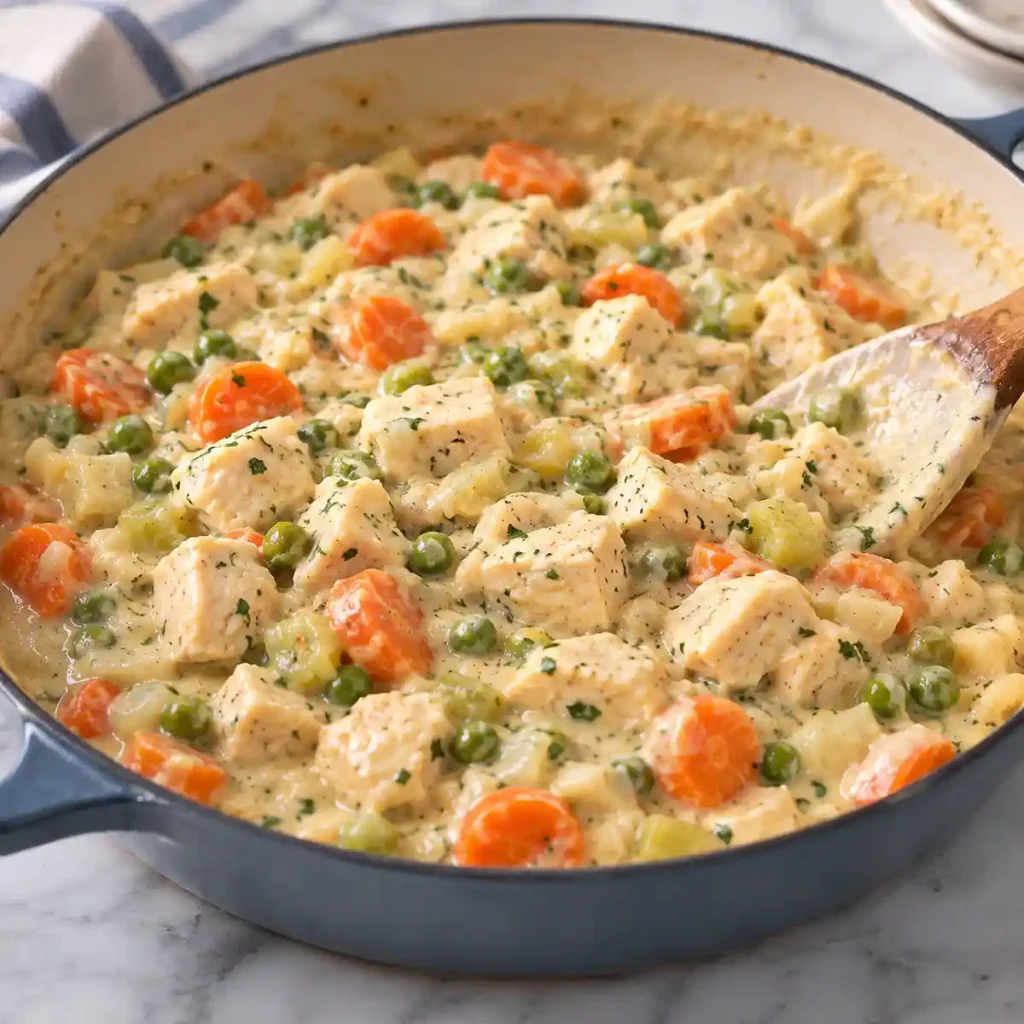
The gravy is where chilled chicken breast gets its second wind. Once the butter, vegetables, thyme, garlic, cream, and broth have formed a thick sauce, fold in the chicken so every piece receives a light coating.
Then add the parsley. Its fresh aroma lifts the richer butter-and-cream flavors, while thyme and black pepper reinforce the savory character of the filling. Taste the finished gravy before it goes into the crust so the seasoning works as a whole rather than trying to season dry pieces of chicken separately.
A silicone spatula is useful for folding the chicken through the thick gravy without breaking the pieces into tiny fragments. Its broad edge also helps scrape gravy from the skillet so more of it ends up where you want it: inside the pie.
How to Make Leftover Chicken Breast Pot Pie
Step 1: Heat the oven
Position a rack near the bottom of the oven and preheat it to 425°F.
Set a 9-inch pie plate and a baking sheet nearby so they are ready when the filling is finished.
Step 2: Soften the vegetables
Melt the 4 tablespoons butter in a large skillet over medium heat.
Add the 1 cup carrots, 1/2 cup celery, and 1/2 cup onion. Season with the salt, garlic powder, thyme, and black pepper.
Cook, stirring often, until the onion softens and the vegetables begin to become tender.
Step 3: Build the creamy gravy
Sprinkle the 1/4 cup flour evenly over the vegetables. Stir until the flour disappears into the butter and vegetables without leaving dry pockets.
Next, gradually stir in the 1/2 cup heavy cream. Then slowly add the remaining chicken broth, stirring as you pour.
Continue cooking for about 3–4 minutes, stirring frequently. The mixture should bubble gently and become thick enough to coat the vegetables.
Step 4: Add the leftover chicken breast
Remove the skillet from the heat.
Fold in the warmed 1 lb leftover chicken breast, 1/2 cup frozen peas, and 2 tablespoons minced parsley. Turn everything gently through the gravy until the chicken pieces are evenly coated.
The filling should look creamy and cohesive, not runny. Let it cool for about 15–30 minutes before assembling the pie. This also gives the gravy time to settle and thicken.
Step 5: Assemble the pot pie
Fit one unbaked pie crust into a 9-inch pie plate.
Spoon in the cooled chicken filling and spread it evenly without packing it down. Lay the second crust over the filling.
Seal the edges of the two crusts together. Then cut 3–4 small slits through the top crust so steam has somewhere to escape.
Step 6: Bake until deeply golden
Set the pie plate on a baking sheet and place it on the lower oven rack.
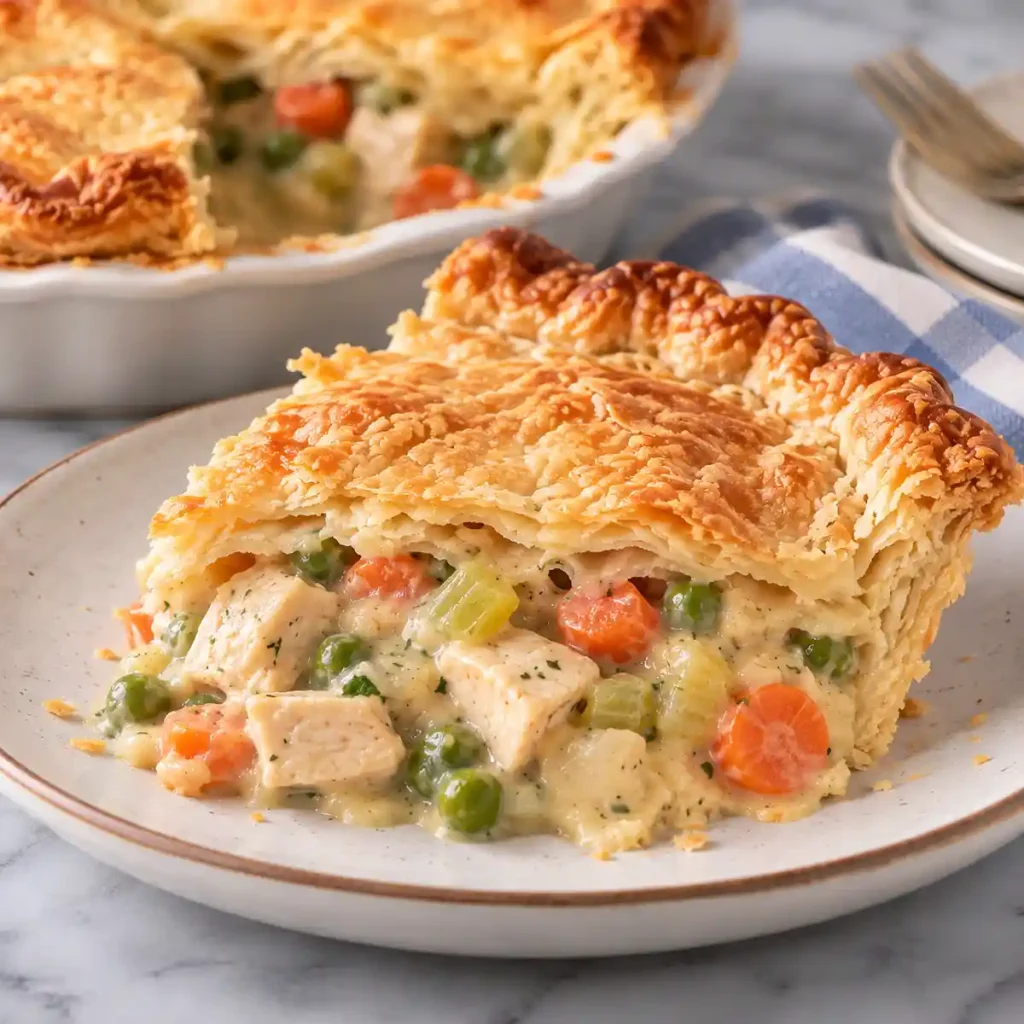
Bake at 425°F for about 30 minutes, until the top crust looks crisp and deeply golden.
Step 7: Let the filling settle
Remove the pot pie from the oven and let it stand for at least 15 minutes before slicing.
That short wait matters. The creamy gravy has time to settle around the chicken and vegetables, giving you cleaner slices instead of filling that immediately runs onto the plate.
Conclusion
This leftover chicken breast pot pie gives chilled chicken a creamy place to land instead of sending it through another round of harsh heat. Thick herb gravy keeps the bite-size pieces surrounded by moisture, vegetables bring color and texture, and the golden double crust makes the finished dinner feel decidedly more exciting than a container from the fridge.